Edge VPS vs. AWS, Azure, and Google Cloud: When Regional Servers Are More Cost-Effective
Contents
In today's world, lots of businesses are trying to find the most appropriate solution that will function well. The main criteria are computing power and high data processing speed. Among all the available variants, we can specify cloud computing and edge computing. So, let’s review the basic criteria of these technologies for choosing the most optimal option.
Basic overview of Edge Computing
Edge computing is an extremely popular technology that functions by processing data closer to the source on edge devices such as servers, sensors, or gateways. Such an approach guarantees quicker processing when compared with the standard centralized approach.
Most of the information is processed locally, so there is no necessity in its sending to the data center. This beneficially impacts the speed of decision-making, but such an approach requires advanced security and distributed infrastructure. Because of the proximity to the data source, edge computing guarantees access to higher security standards, instantaneous processing, and exceptional fault tolerance.
The major benefits of edge computing:
- The significant speed-up of the analysis and filtering of the information closer to the sensors. After completion of the analyses, only the relevant information is redirected to the cloud.
- Delay minimization. Because of the shorter response time, it is possible to guarantee higher safety of the mission-critical operations. In some cases, waiting for a cloud-based response can be detrimental for the platform.
- Edge computing means that all the sensitive information can be processed right away, so it can be protected from direct network connections. This guarantees an exceptional level of control over privacy and security.
- Minimization of financial spending. Due to the fact that most information will be processed on the edge devices, it is possible to minimize cloud data storage capacity.
The sphere of edge computing utilization
Let’s review the standard use cases for this technology. Here are a couple of practical utilization variants for a better understanding of the approach:
- Autonomous vehicles. Such vehicles have lots of instant information from the sensors and cameras, so it is highly important to detect new obstacles and immediately adjust to the circumstances. For instance, a car should automatically detect pedestrians and react accordingly rather than wait for the cloud server response.
- Smart devices. The analysis of the information from the sensors should be conducted momentarily for the proper system response. For instance, a smart thermostat should immediately regulate the temperature for the maintenance of the optimal humidity level.
- Manufacturing businesses. For the optimal analysis of the performance metrics, proper monitoring of the equipment, and detection of potential breakdowns, edge computing can be the most optimal choice.
- Healthcare system. The collected information from the medical devices should be immediately used by the healthcare specialists, and such a process can be perfectly organized with the edge computing approach.
The core difference between the edge and cloud computing
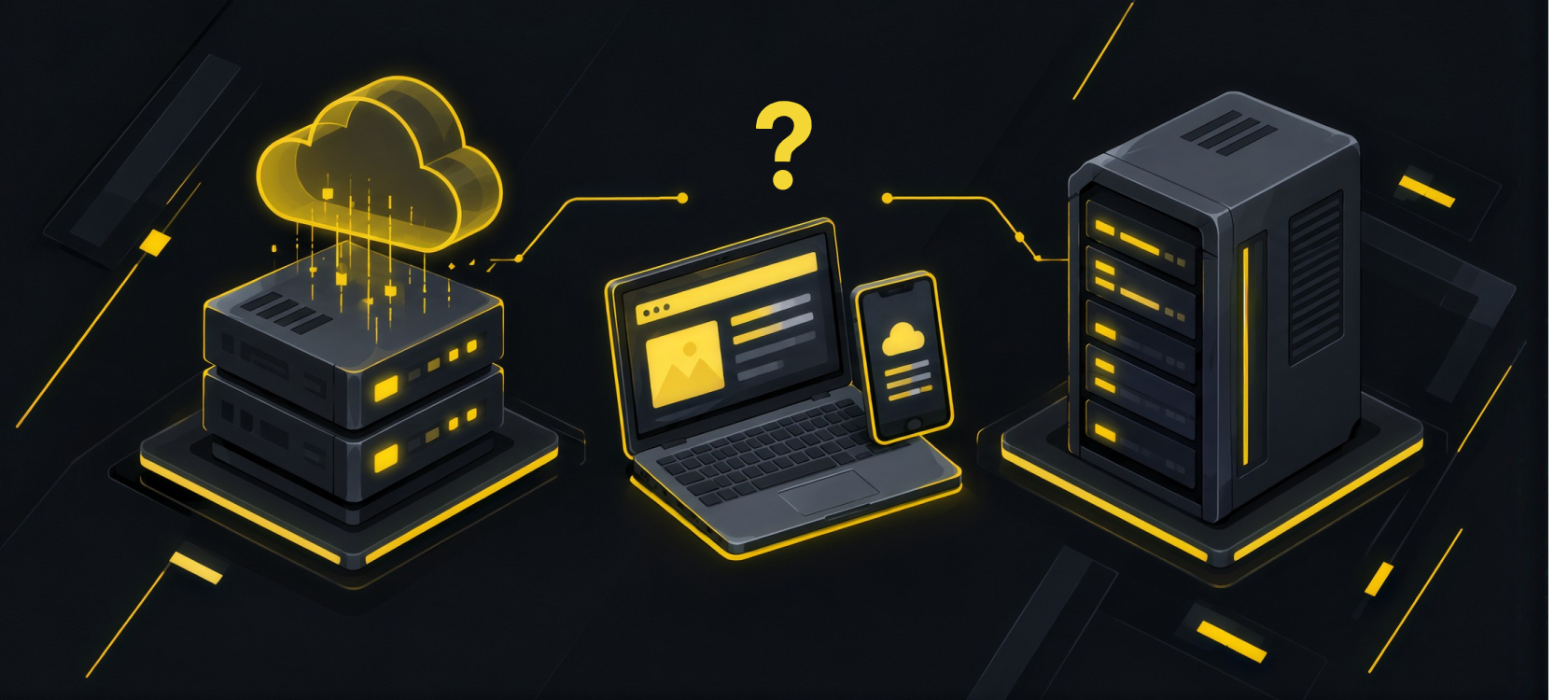
The major difference between the edge and cloud computing is the response time. Edge technology has a lower response time because it is not connected to data transmission to the cloud. This factor is crucial for the diversity of projects such as predictive maintenance and autonomous vehicles. Whereas cloud computing guarantees access to higher processing power for data storage, analytics, and machine learning.
Generally speaking, the major difference between the two technologies is the distance from the computing resources. Cloud computing has high latency due to the long chain of servers in the network. Whereas edge computing offers a shorter route with significantly minimized response time.
Understanding cloud computing
Cloud computing is an extremely popular technology that offers access to storage, servers, networking, and databases via the internet. Users no longer need to maintain physical servers because of the services that cloud service providers offer. Among the most popular providers, we can specify Google Cloud, Amazon Web Services, and Microsoft Azure.
This technology functions on the basis of remote data centers with powerful storage systems and servers. There are a couple of models via which cloud services are offered, such as PaaS or SaaS. Probably the main characteristic of such an approach is its scalability and flexibility. And of course, there might be some similarities with edge computing, but there are totally different technologies with various principles of functioning.
A few benefits of cloud computing:
- Exceptional scalability of resources. With cloud computing, it is much easier to increase and decrease resources according to the changing business requirements.
- Centralized approach. Organizations can manage huge amounts of information in a centralized environment, which makes backups and admin tasks much easier.
- High computing capacity. Data centers can offer huge memory capacity for the launch of work-intensive projects such as big data analytics and AI.
- Simplified maintenance. Most of the processes are usually managed by the cloud service providers, so it is possible to minimize technical workload for organizations.
When can Regional Servers be more Cost-Effective?
Edge computing can be considered a more cost-effective variant when a company plans to process information close to the place of its generation. Instead of sending it to the centralized cloud, local devices are used for the completion of the required tasks. This technology can significantly minimize network costs, support reliable operation, and even reduce response time.
To cut a long story short, edge computing may be the optimal solution when a huge amount of information is generated, and you need its rapid processing and local decision-making process. By choosing this method, you will have less dependence on internet connectivity, minimize latency losses, and gain a variety of other benefits.