How to Cool Modern Servers: Air vs. Liquid vs. Immersion
Contents
Current servers are designed to perform complicated tasks, from cloud hosting to AI processing. However, increased computational resources are followed by an increase in temperature generation. The team of HostZealot understands the importance of efficient cooling in relation to server performance, efficiency, and reliability. While air cooling is a widespread practice, liquid and immersion cooling provide alternative solutions.
Thus, what approach should be chosen for your data center? Read about them in the article.
1. Air Cooling: A Reliable Classic
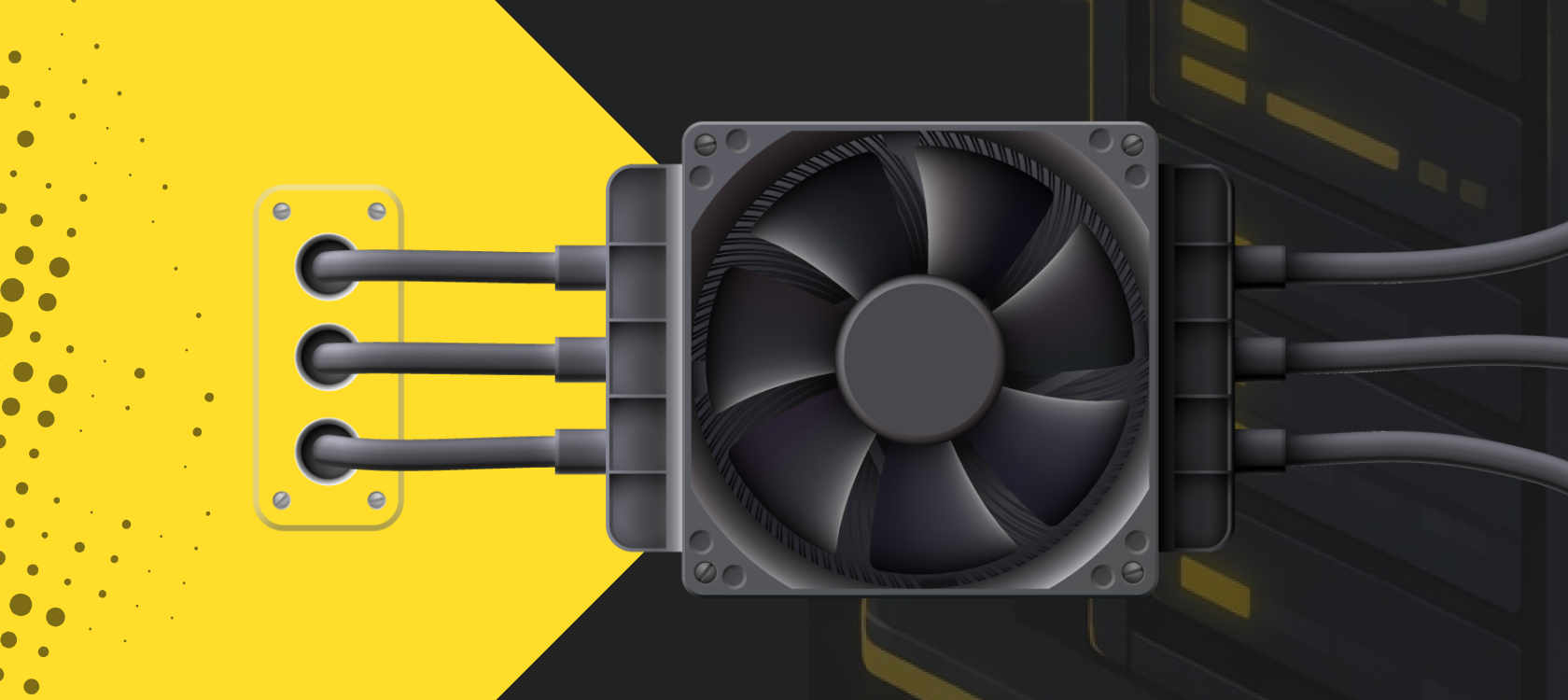
Air Cooling Technology employs fans and cooling units to transfer heat from server components. Cold air flows through the hardware, heats up, and is transferred towards the cooling unit. The reason why this type of technology is popular is that most existing servers work with it and its maintenance does not pose any difficulties.
Moreover, you can optimize the process of air flow through server components by dividing aisles into hot and cool, sealing the gaps, and adjusting the speed of fans. But due to increasing power consumption and the small space where it is used, CPUs and GPUs heat up faster.
At HostZealot, we consider air cooling a practical option for traditional hosting, web applications, storage, and many standard server workloads.
2. Direct Liquid Cooling: Bringing Cooling Closer to the Heat
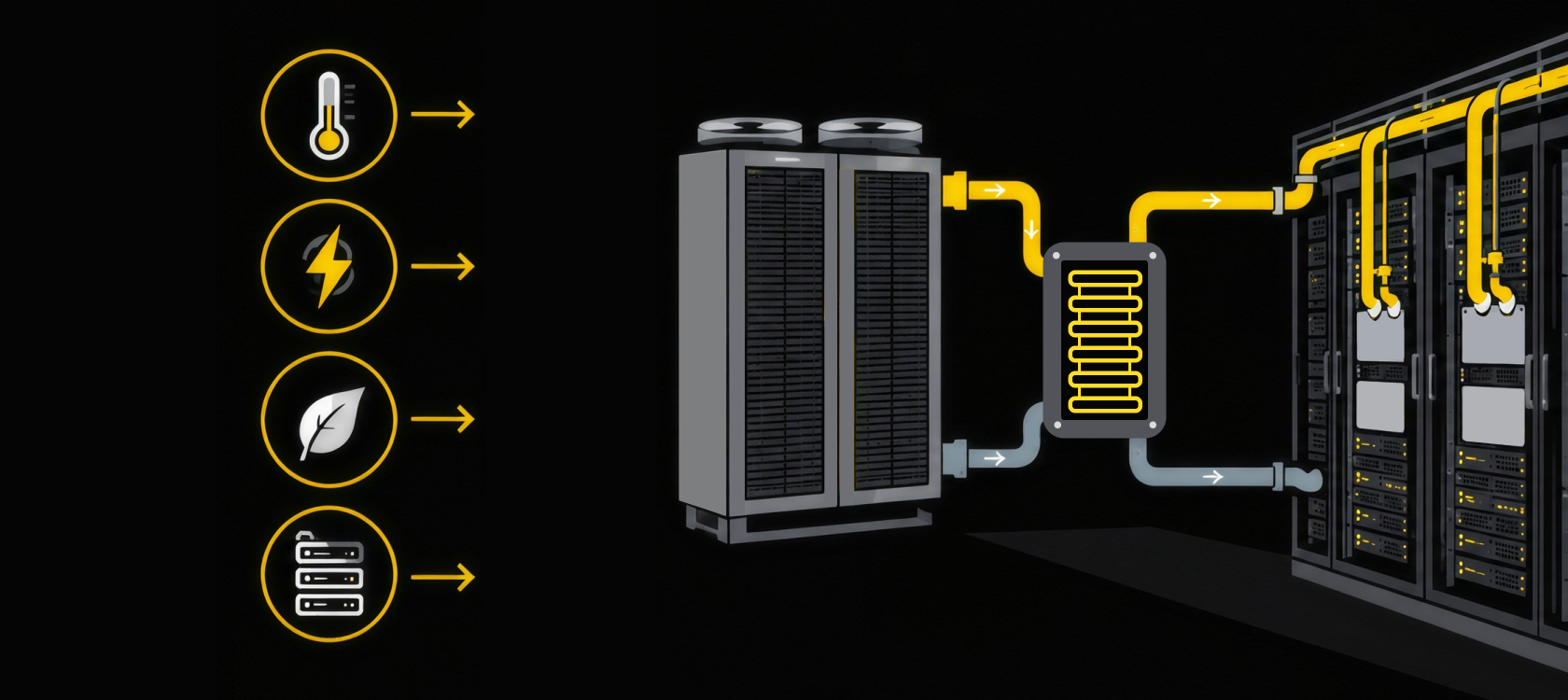
Direct liquid cooling removes heat with the help of a liquid that flows through cold plates attached to components such as CPUs and GPUs. The coolant absorbs heat and transfers it to a heat exchanger, where the system releases it. Whereas immersion cooling involves direct contact between the liquid and the electronics, the liquid is normally contained within the pipes or channels in liquid cooling. This makes it suitable for complex artificial intelligence processing workloads, high-performance computing, and GPU-intensive servers.
The disadvantage with this cooling technology is that your existing infrastructure should have all the necessary equipment such as pumps, pipes, coolant distribution units, and leak detection sensors. Furthermore, liquid cooling may not get rid of the need for fans in servers because some other components would require airflow.
Liquid cooling is recommended if your computing requirements go beyond the capabilities of air cooling
3. Immersion Cooling: Submerging Servers in Dielectric Fluid
Immersion cooling is an entirely new method. It involves placing server hardware components that can be used with the method in a tank filled with a dielectric fluid that does not conduct electricity under the desired working condition. Heat is absorbed by the fluid itself from the equipment immersed in it.
The fluid may be maintained as a liquid in single-phase systems and undergo boiling and condensing in two-phase systems. Depending on the type of system employed, immersion cooling may enable removal of fans from servers and high-density computing. Heat recovery for appropriate heating uses may also be made possible through immersion cooling.
4. Which Cooling Technology Should You Choose?
Each technology has its strengths, and the right choice depends on your workload, budget, rack density, and facility design.
| Factor | Air Cooling | Direct Liquid Cooling | Immersion Cooling |
| Best suited for | Conventional servers | High-density CPUs and GPUs | Specialized, dense computing |
| Infrastructure | Fans and cooling units | Cold plates, pumps, and coolant loops | Tanks and dielectric fluid |
| Hardware changes | Usually minimal | Liquid-compatible components | Immersion-compatible equipment |
| Maintenance | Familiar procedures | Liquid-loop expertise | Specialized fluid handling |
| Energy efficiency | Depends on airflow and facility design | Can reduce cooling overhead | Can perform efficiently with suitable system design |
However, no technique ensures minimum energy usage. The entire system has to be considered, from pumps and fans to chillers and the heat rejection system. You must also factor in water consumption, the costs associated with maintenance, and the potential for waste heat reuse.
For standard loads, an appropriately designed air cooling system could be your best bet.
For intense AI servers, liquid cooling may serve as a better compromise between performance and engineering simplicity. Immersion cooling is justified when extremely high computer densities are required.
Final Thoughts
Cooling of the server is related to the expenses incurred, future growth of the infrastructure, and increasing computing capacity.
Instead of picking the technology that is just more developed, base your decision on the actual workload and the forecasted growth rate of it. Take into account the following factors such as the power of the rack, power consumption, maintenance capabilities, and financing when choosing the technology. Air cooling remains an undeniably reliable method, whereas direct liquid and immersion cooling offer several new perspectives.
The optimal method is the one that will provide the reliability of your servers and futureproofing of the infrastructure