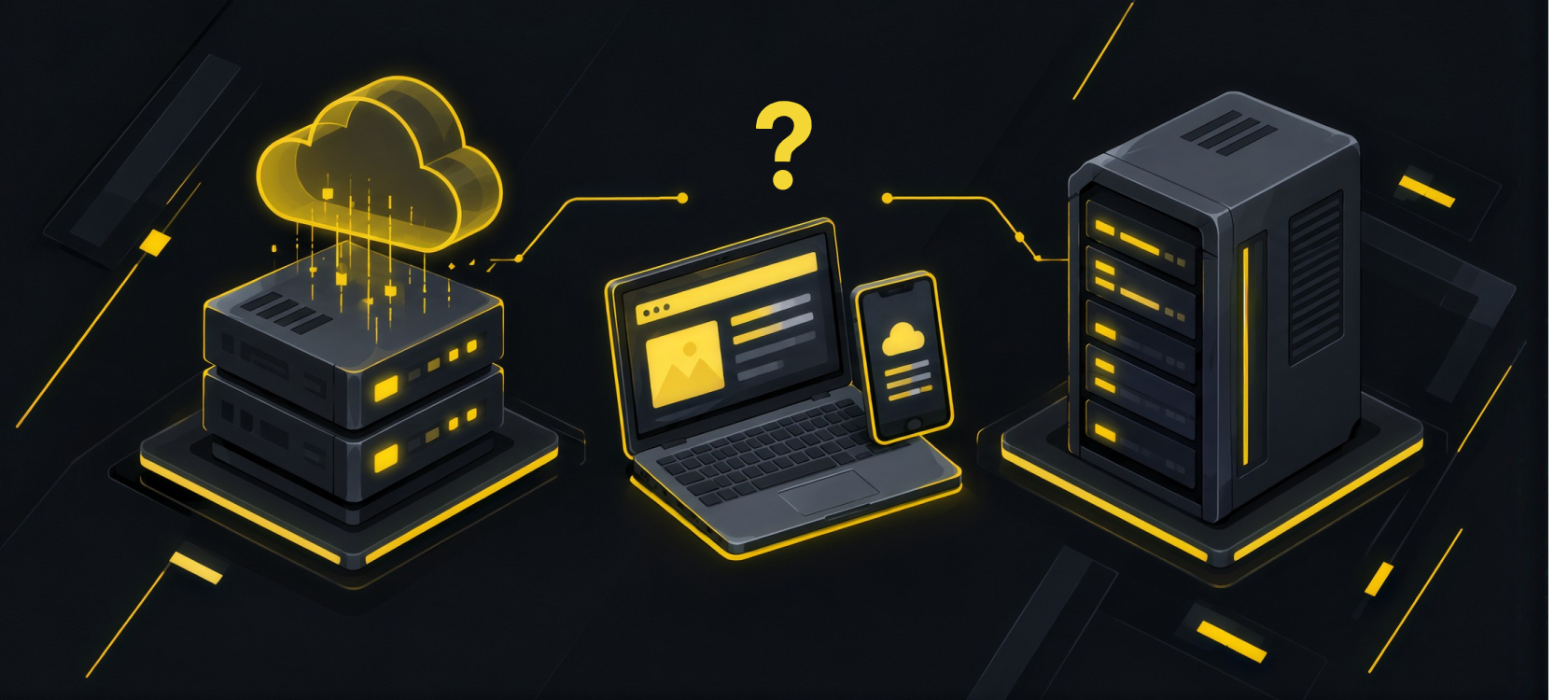
Why Are Data Centers Switching to Liquid Cooling?
Contents
It is hard to imagine the modern world without data centers, which function as a major part of the entire digital economy. Data centers operate 24/7, with uninterrupted data storage systems, servers, and network equipment functioning. Transmitting such an enormous amount of information results in the highest-ever heat generation.
The excess heat generation is considered to be the major threat to the reliable and stable functioning of the IT infrastructure. That means effective cooling strategies should be chosen for the minimization of the huge failures and malfunctioning.
In this article, we will dive deeper into the explanation of the cooling technologies. So, let’s try to understand how to create the most optimal conditions for the equipment to improve its reliability and minimize operational costs.
Why is there a necessity for cooling systems?
For the stable functioning of the equipment, there is a necessity for continuously functioning cooling systems. Such systems are needed for supplying cooled air, removing excessive heat, filtering dust, and maintaining an optimal level of humidity. If all the needed conditions aren’t met, it is possible to have unpredictable consequences.
High temperature can directly impact the server equipment failure and malfunctions. Every piece of equipment has a recommended temperature range given by the manufacturer. That means when equipment is functioning under the highest allowable temperature, it won’t last for as long as it should.
Overheating creates a range of troubles that impact the overall cost of the infrastructure. During overheating, performance declines tremendously, then software issues occur, and over time that may lead to complete server failure. The price of the server replacement or repair can become a huge financial signal that something should be changed in the overall approach.
Optimal Conditions for Stable Equipment Operation
The most optimal environmental parameters in the server room are considered to be +18°C to +24°C, whereas the humidity level should be between 40 and 60 %. If the humidity level exceeds the standard range, then it can lead to equipment corrosion, while too low humidity can provoke the buildup of static electricity.
Another critical aspect is air purity. The dust content should not exceed 0,75 mg per cubic meter. In addition to this, the air should also undergo specific filtration and meet EU4 class. This part is specifically important because the dust particles can settle on the microchips and provoke localized overheating that can cause short circuits.
With that being said, the optimal conditions are related not only to the temperature, but to the entire microclimate management which require usage of the integrated solutions.
Understanding the PUE Ratio
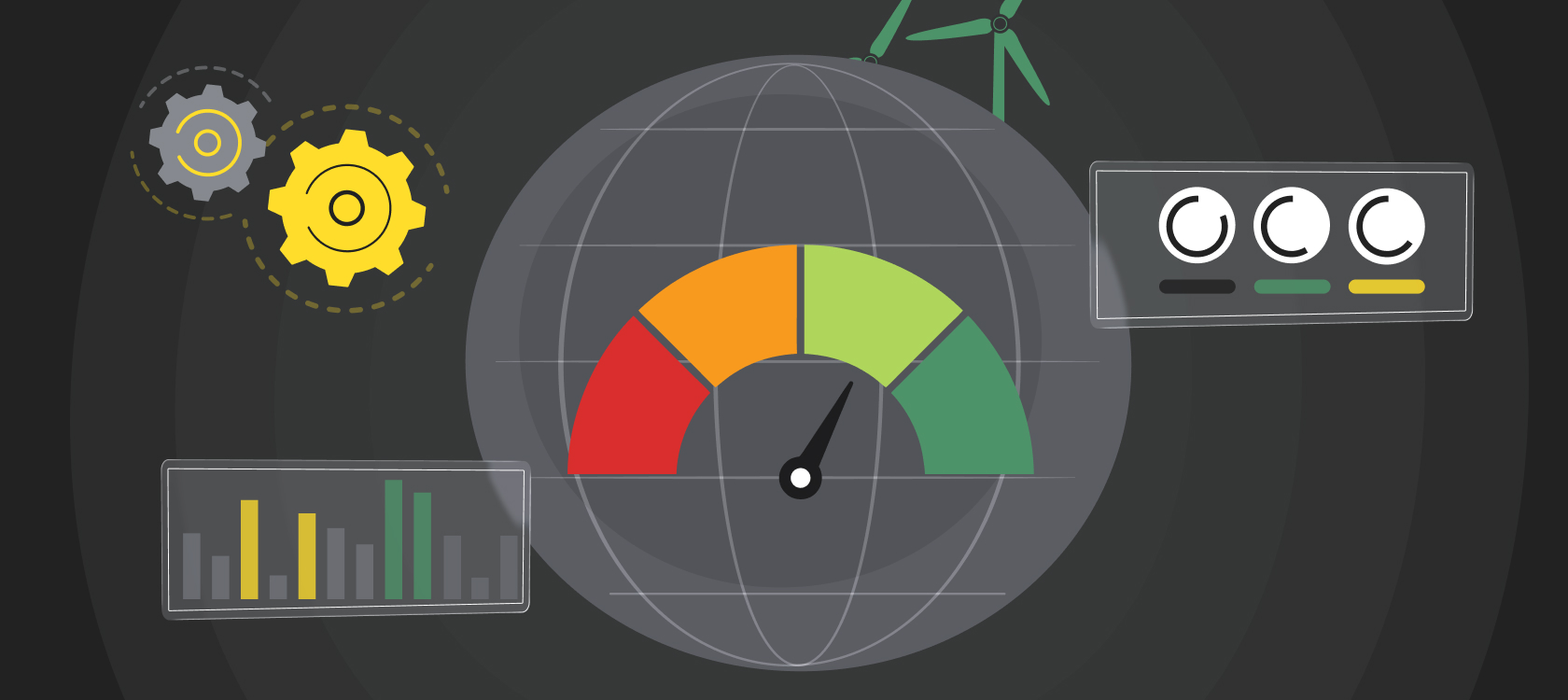
The assessment of the data center efficiency is conducted with certain metrics. One of the key ones is PUE, or Power Usage Effectiveness, which helps to evaluate the efficiency of energy usage.
PUE is a ratio of the total amount of electricity consumed to the amount of energy used specifically by the data center’s equipment. By calculating these numbers, it is possible to identify the proportion that is used for the auxiliary infrastructure such as cooling, lighting, and other systems.
The low PUE metrics specify that the infrastructure in the data center is more efficient. There is a diversity of options for proper optimization of the PUE level, but the most basic one is considered to be improvement of the cooling process.
Key technologies for the data center cooling
The choice of the cooling system is a huge decision that is related not only to the initial financial investment, but to long-term operational spending as well as future scalability. So, let’s review the major approaches to cooling systems.
Air cooling technology
Probably the most common approach is air cooling that is based on air circulation. The process functions by getting the heat from the equipment and transferring it to the cooling elements. There can be used various types of conditioners such as rack-mounted, ceiling-mounted, or aisle-mounted. The major principle lies in the separation of cold and hot airflows.
The primary benefits of such a method are its lower initial costs and relative simplicity. Whereas the major disadvantage is its energy efficiency, because conditioners can hardly deal with localized overheating of servers.
Liquid cooling method
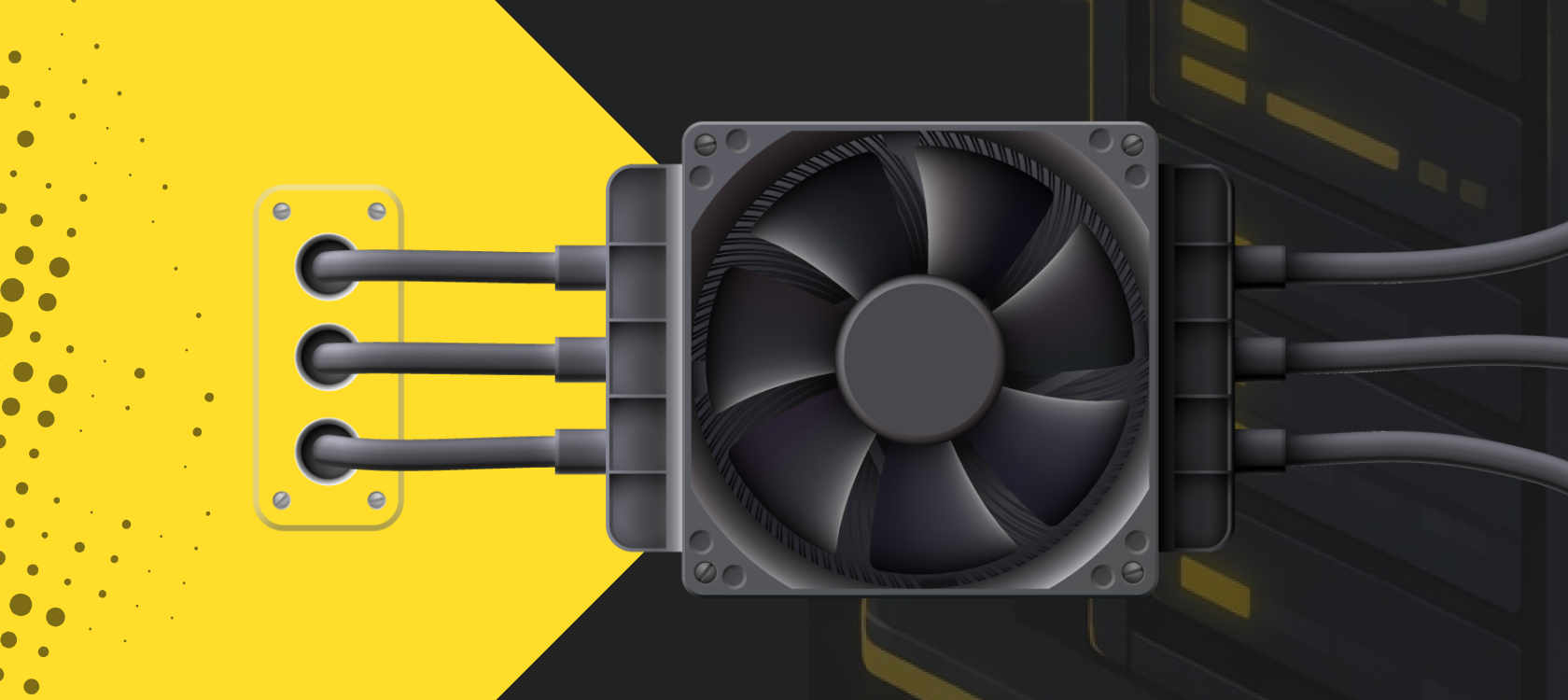
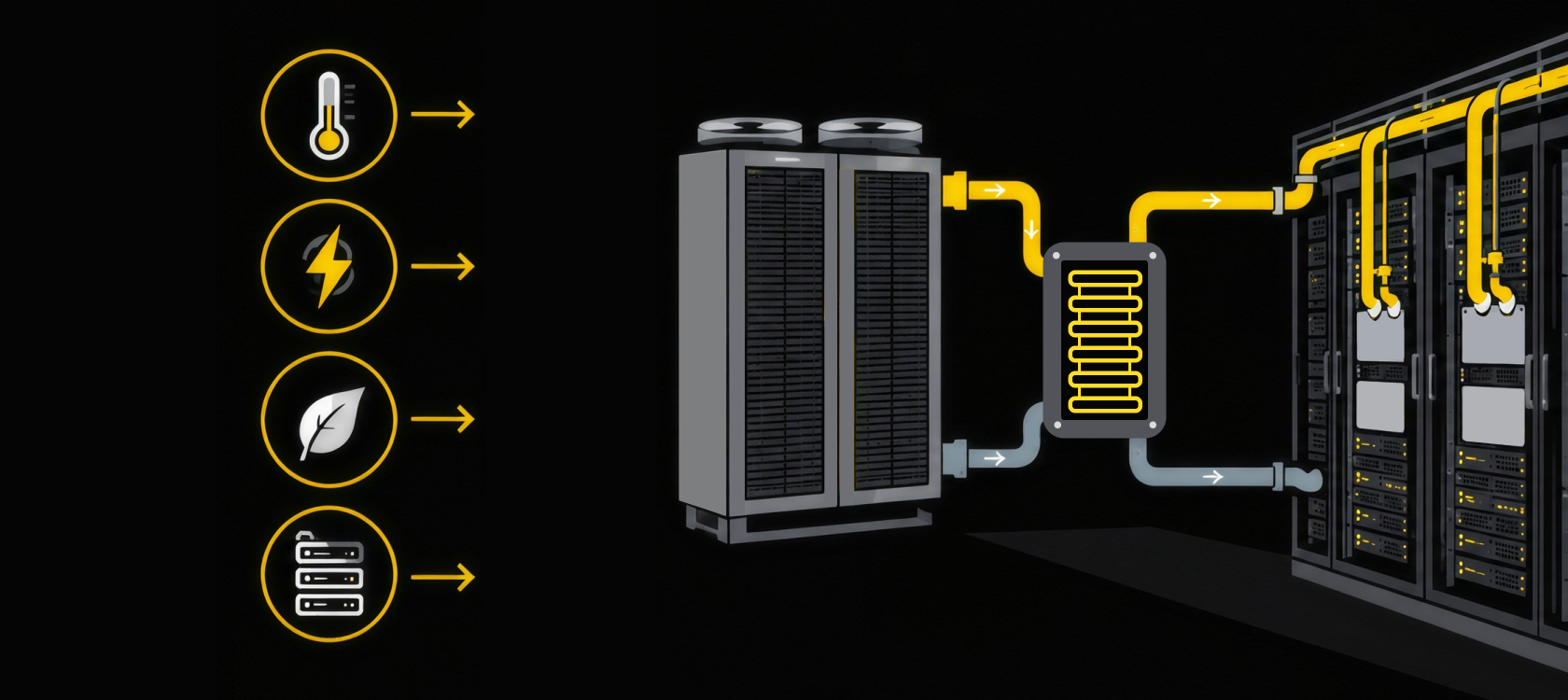
Due to the increased demand for AI, high-performance computing, and machine learning, there is an exponential increase in heat generation. Standard air-cooling systems can no longer cope with such a large amount of heat, which makes liquid cooling a huge necessity. Such an approach functions on the basis of liquid coolants such as mineral oil, water, and fluorinated liquids.
Here are a couple of the standard types of liquid cooling:
- Direct liquid cooling or the use of cold plates. The cooling process functions based on the special plates attached to the hot components
- Immersion cooling. The equipment is fully submerged in a dielectric fluid. This method can reach phenomenal levels of PUE such as 1.05.
Such an approach has major advantages such as the highest energy efficiency, options for increasing equipment density, and also a minimization of the data center floor space. The main disadvantage is higher capital costs.
Freon and Hybrid cooling
The standard Freon cooling approach functions on the basis of compressors that remove heat. Among the other possible variants, we can specify free cooling that functions by the use of the cold outdoor air, which can significantly reduce the heat during colder months. One more great variant is adiabatic cooling, which is based on the principle of water evaporation.
The usage of hybrid systems is especially beneficial because it is possible to switch to the most appropriate method in the current circumstances. That’s why it is possible to improve energy efficiency, overall reliability, and minimize PUE.
Conclusion
The increased demand for AI, high-performance computing, and machine learning is directly impacting the amount of energy used. That’s why the use of the appropriate cooling systems is so crucial nowadays. Switching to liquid cooling is becoming the optimal decision for more efficient heat removal and minimization of energy consumption. As computing power is constantly increasing, liquid cooling can become the most practical and scalable solution for sustainable data center operations.